

BE WTR: Pure water, made local.
No transport. No plastic.
Founded in Switzerland, Be Wtr Treats any local tap water, making it equal to
or better than mineral water
10 September 2025
Share this exclusive content from Saladplate
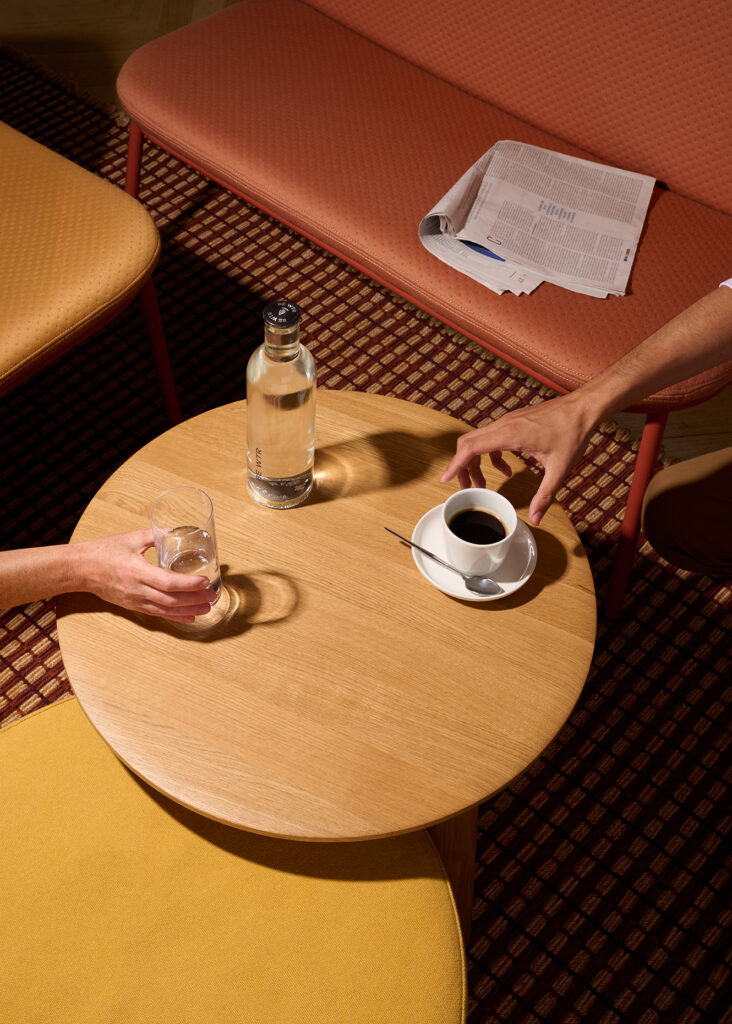

BE WTR’S process creates still, sparkling, an activated water that enhances taste experiences | Photo credit: BE WTR
Imagine your tap water tasting identical to that of a premium brand or transforming into a beverage that enhances the flavours of your meals. This scenario is not the script for a sci-fi movie—it’s a current reality made possible by innovative technology. BE WTR’S process creates still, sparkling, and even activated water that enhances taste experiences.
Singapore is one of the first markets outside Switzerland to adopt this technology, a key market for the brand due to its quality, infrastructure, and status as a high-end gastronomy capital.
State-of-the-art Swiss filtration processes, utilising active carbon and optimised contact time, allow BE WTR to take water of varying quality levels and filter it to high standards. Restaurants in Singapore such as Araya, Cloudstreet and St Pierre are early adopters.
The company has also developed a special carafe that activates water as if it were from a natural mineral water source. “This AQTiV technology opens taste buds,” says Mike Hecker, CEO and founder of BE WTR, allowing water to become an integral part of a meal, enhancing the perception of dishes, and elevating water from being a basic beverage.
How?
BE WTR has revolutionised the industrial model of bottled water production by moving from large central bottling facilities to small sites. These compact, automated bottling plants (fitting into 50 square meters) can be in city centres or even . In Singapore, The Singapore EDITION, The Westin Singapore and W Singapore – Sentosa Cove have their own plants.

CEO and Founder Mike Hecker | Photo credit: BE WTR
CEO and Founder Mike Hecker | Photo credit: Be Wtr
“What we have done is turn water production upside down. We went into what I call micro-bottling, without shipping or with minimal shipping. This is less efficient from a production point of view, but more efficient from the cost of transportation and the ecological footprint,” explains Mike.
Mike is no stranger to the bottled water market. “I had a water business (Eden Springs) which was the largest in Europe, with over 1000 trucks out on the roads every day. I realized I was a polluter and wanted to do better. How could I avoid all this transportation? It made me think about taking tap water and building technologies to find a solution that avoids transport but keeps great-tasting water as the objective.”
Unlike hotels that bottle their own water (where food manufacturing licenses are often lacking), BE WTR produces and bottles water in state-of-the-art, automated facilities, adhering to strict food laws. Hotels and restaurants can sell this to guests The Raffles, Raffles Sentosa and The Standard are all offering BE WTR in-room to guests.
BE WTR is available in reusable glass bottles (that can be rotated more than 300 times) along with stainless steel bottles for hotel areas where glass could be an issue, such as the gym or pool.
All bottles are delivered sealed, and the empties are collected for reuse.
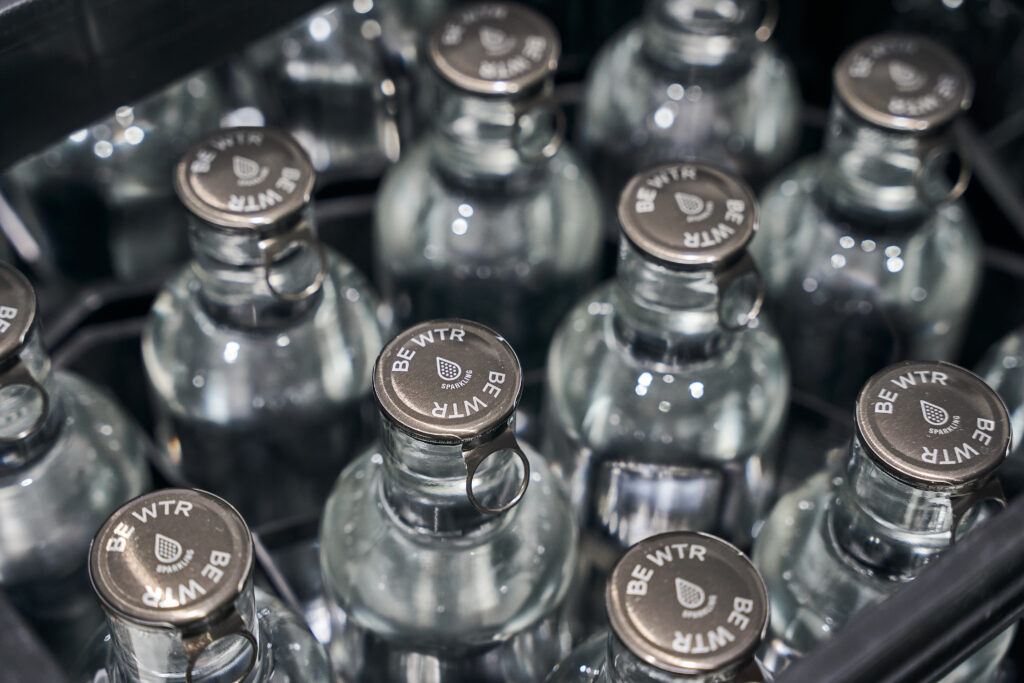
BE WTRs bottles are delivered sealed, and the empties are collected for reuse | Photo credit: BE WTR
BE WTRs bottles are delivered sealed, and the empties are collected for reuse | Photo credit: BE WTR
This approach significantly improves profit margins for F&B operators, potentially compensating hotels for higher costs in housekeeping compared to providing water in plastic bottles. Even more excitingly, this technology can purify water in countries where the quality is poor, making it drinkable. This will be a game-changer in regions where basic needs are still not being met.
“We are talking with many governments, especially in areas where they have a real sensitivity to conservation, but a real issue with pollution. There are some very nice discussions where politicians are seeing an advantage to go beyond F&B and provide a more sustainable solution,” Mike adds.
With enthusiastic take-up from hotels and restaurants in Singapore, expansion across Asia is planned. Because of its size, China is a key target market, with Mike focused on countries where he can make the biggest impact, to provide pure, high-quality water for every table.


Photo credit: BE WTR
Author: Alison Marshall
Alison Marshall is a seasoned journalist, writer, and editor with over 30 years of experience in print and digital media across global markets covering sectors from hospitality to finance. A Brit by birth she has lived in Singapore since 2008, a country which continues to fascinate. In her free time, she enjoys cooking and cocktails and loves a local market wherever she travels.