

1887 by André at Raffles Singapore Is Betting On Heritage Gastronomy
Chef André Chiang’s much-awaited return to Singapore’s fine dining landscape has already won laurels, including a two-Michelin-starred debut.
29 September 2026
Share this exclusive content from Saladplate
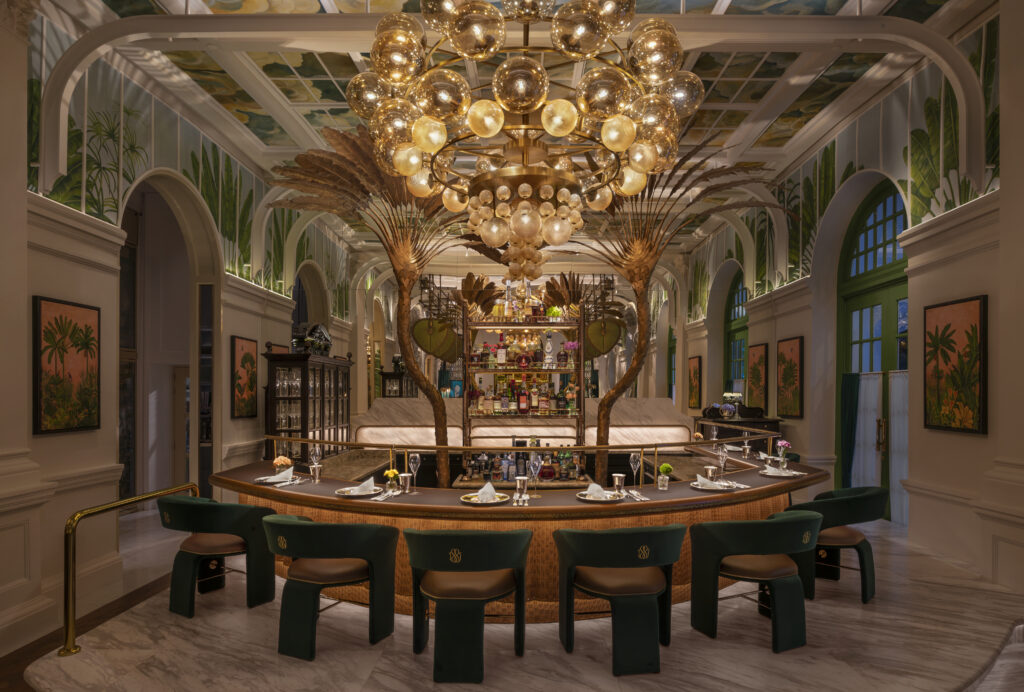
Chiang is quoted on the hotel’s website: “1887 by André is my love letter to the city that shaped me.” | Photo credit: Raffles Singapore
Chiang is quoted on the hotel’s website: “1887 by André is my love letter to the city that shaped me.” | Photo credit: Raffles Singapore
A handful of new openings in Singapore are championing heritage in increasingly refined ways. After all, it is a food-obsessed, multicultural city with a layered culinary history. A single fine meal at the right address should ideally serve as an edible primer.
1887 by André is the clearest expression of that shift. Order the full degustation or eat à la carte; it doesn’t matter. Either way, you’re seated inside a ‘time capsule’, surrounded by collectables that are conversation starters and interiors that only a grand dame like Raffles Hotel could have assembled.

Ingredients inspired by time, place and tradition | Photo credit: Raffles Singapore
Ingredients inspired by time, place and tradition | Photo credit: Raffles Singapore
This year, 1887 by André earned a Two-Star debut on the Singapore edition of the MICHELIN Guide, recognised for the consistency of its cooking and its distinctive interpretation of French and Asian flavours, no small feat for a restaurant that has been open for only a few months.
Named for the year Raffles opened, the 42-seat restaurant occupies the hotel’s century-old formal dining room, reimagined by Bill Bensley as a tropical glasshouse. The original herringbone flooring in the building sits beneath a hand-painted palm-canopy ceiling. Antique punkah fans in emerald fabric turn overhead. Sculptural interpretations of the Traveller’s Palm, Raffles’ botanical emblem, appear throughout, alongside heritage silverware pulled from the hotel’s own archives. It is, by design, less a restaurant than a curated memory. It occupies the space vacated by the contemporary French restaurant La Dame de Pic in Raffles Hotel. It also marks Chiang’s fine dining comeback in Singapore eight years after the closure of the two-Michelin-starred Restaurant Andre.
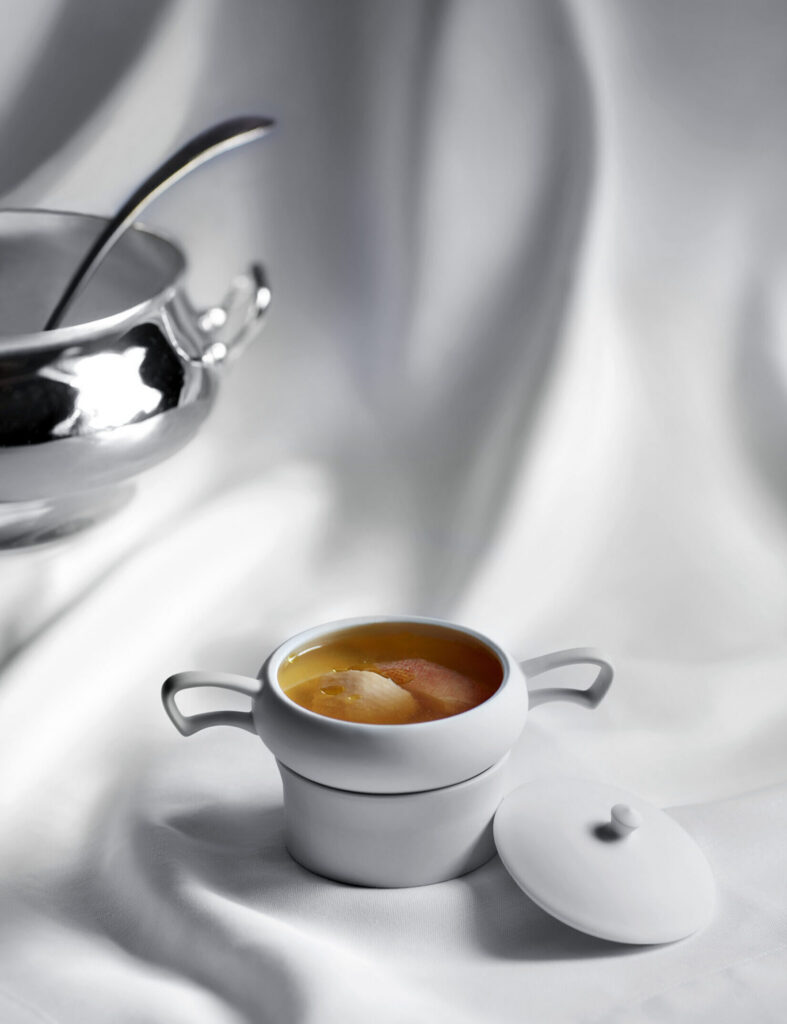
The reimagined turtle soup, actually contains no turtle but instead
double-boiled chicken, grouper and herbs | Photo credit: Raffles Singapore
The reimagined turtle soup, actually contains no turtle but instead
double-boiled chicken, grouper and herbs | Photo credit: Raffles Singapore
In Asia, the fine-dining landscape has always been driven by tasting menus and chef personality, but despite having both, 1887 by André stakes its identity on something else entirely: nostalgia and history. Chef Patron André Chiang calls it Contemporary Heritage Gastronomy, cuisine that interprets the past through modern French technique. A genuine evolution of how heritage cooking can be executed and a refined level of craft. Chiang arrived in Singapore in 1984, built Restaurant André here, and has spent four decades accumulating a relationship with the city.
His menu at 1887 makes its case in specifics. Signature dishes include Boeuf aux Sept Poivres 1887, carved tableside from a restored silver beef wagon that was buried on the hotel grounds during the Second World War to prevent looting, then recovered and returned to service. There’s a reworked Turtle Soup, revived from a century-old Raffles recipe once considered the height of European luxury dining in the region. Alongside these sits a run of familiar Singaporean dishes reinterpreted through French technique: Hae Bee Hiam, Bak Kut Teh, a version of chicken rice, Laksa Paella, Lobster Hae Mee.
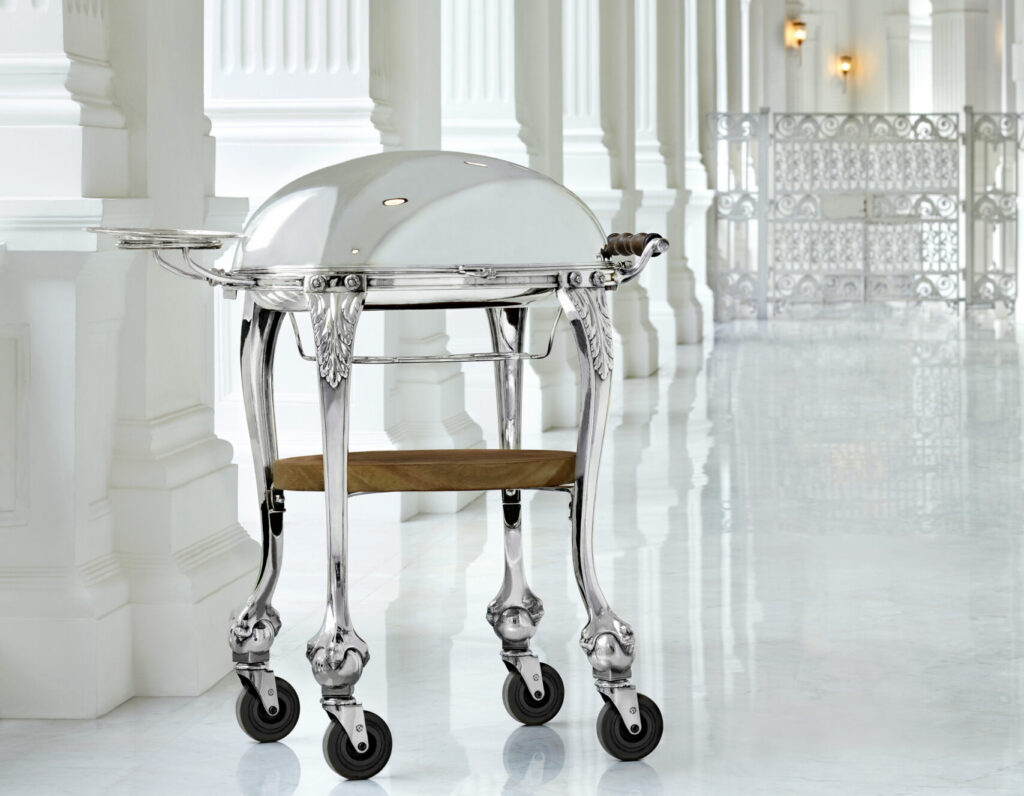
Silver beef wagon | Photo credit: Raffles Singapore
Silver beef wagon | Photo credit: Raffles Singapore
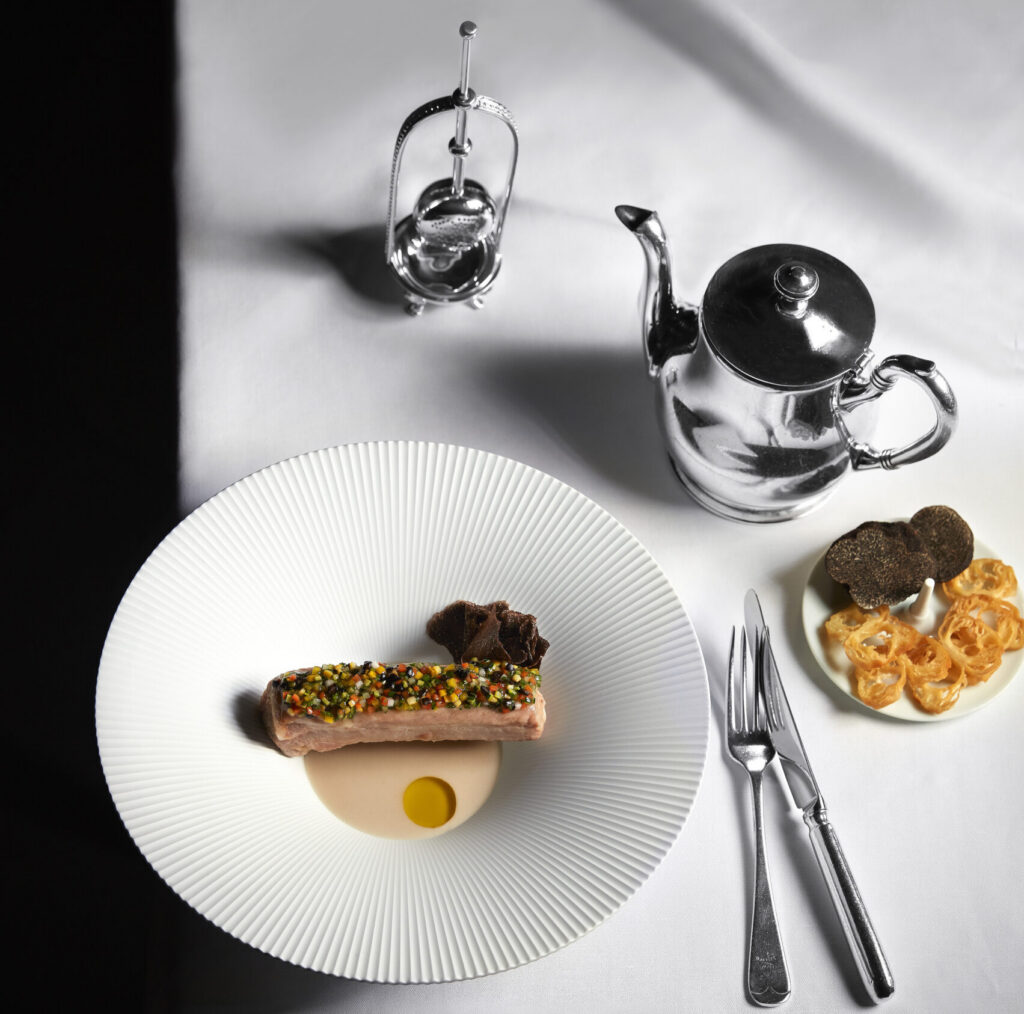
Blanquette de “Bak Kut Teh” at 1887 by André | Photo credit: Raffles Singapore
Blanquette de “Bak Kut Teh” at 1887 by André | Photo credit: Raffles Singapore
It is reported that Chiang spent about a year developing the menu after studying the hotel’s menus dating back to the 1930s and speaking with the hotel’s resident historian, Mr Leslie Danker.
Of these, he singles out bak kut teh as the hardest to reinterpret. “It is such a familiar and emotionally resonant dish,” he says. “Its identity is not only in the ingredients, but also in the warmth of the broth, the herbal depth and the comfort it gives. When a dish is so deeply rooted in everyday memory, the question is not simply how to change its form, but how to retain what makes it immediately recognisable.” The result, Blanquette de “Bak Kut Teh”, was built to preserve that flavour memory through a French lens. “This is the most delicate form of reinterpretation: working with something people know not only by taste, but by feeling.”
Provenance is the next test. A restaurant built around the claim of being a “snapshot of Singapore” needs more than atmosphere to back it up. Chiang points to sourcing as one layer of that proof, with a menu built around “ingredients that reflect Singapore’s tropical climate, regional pantry and multicultural flavours.” The other layer sits on the table itself, in the heritage silverware, archival service pieces and objects drawn directly from Raffles’ own history. “The local connection exists on multiple levels,” he says, “in flavour, in atmosphere and in the physical experience of dining here.”
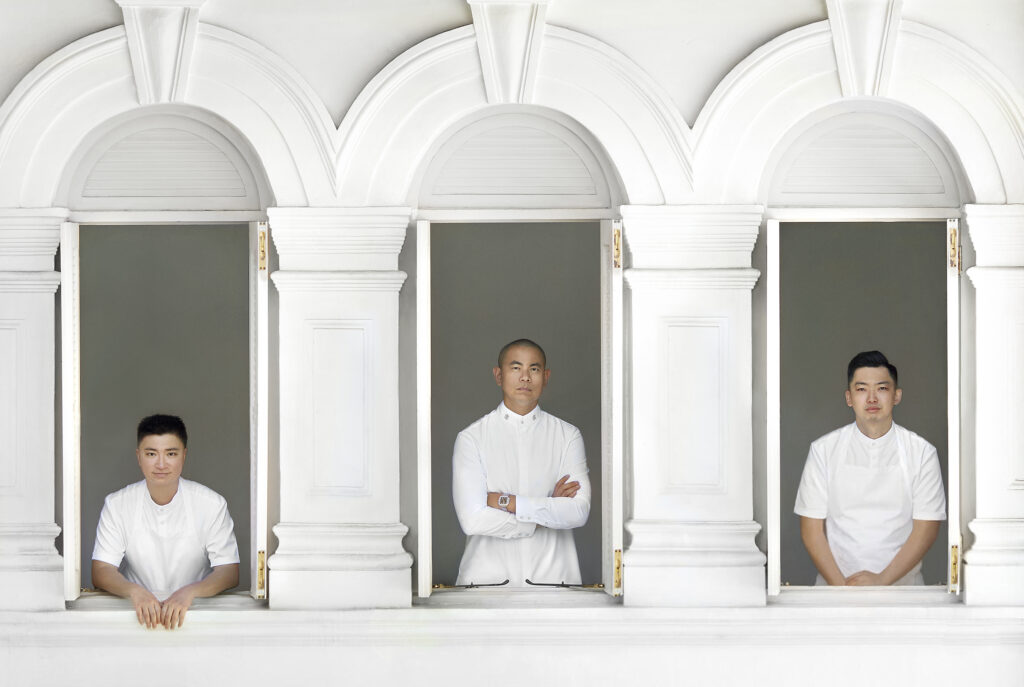
Chef de Cuisine Ben Wang and Sous Chef Roy Kuo, who run 1887’s kitchen day-to-day, have both trained under Chiang | Photo credit: Raffles Singapore
Chef de Cuisine Ben Wang and Sous Chef Roy Kuo, who run 1887’s kitchen day-to-day, have both trained under Chiang | Photo credit: Raffles Singapore
Guests choose between à la carte and three guest-led tasting journeys—Formule Monet, Formule Eiffel, and Formule Bernhardt—each drawing on Victorian and Belle Époque-era references alongside his own signatures. The kitchen is run day-to-day by Chef de Cuisine Ben Wang and Sous Chef Roy Kuo, both trained under Chiang for close to a decade at RAW in Taipei.
On how present the Chef Patron will be at 1887, he says, “I am personally involved at both a strategic and creative level, and I expect to spend significantly more time in Singapore than anywhere else, while still travelling when necessary.” The menu, he says, was built by asking whether each dish would “still be relevant in 10 or 20 years later”, a test he calls “Taste of Time.” Change won’t come for its own sake. “Some dishes may remain because they carry an important part of the restaurant’s identity, while others will shift over time as new archival discoveries, seasonal ingredients and new reflections emerge.” The intent, as he puts it, is for the menu to “evolve gradually and thoughtfully, always in a way that feels true to the story of the restaurant.”
Pressed on whether a specific memory from his 1984 arrival appears on the menu, Chiang says. “What stays with me most is not a single dramatic moment, but a collection of impressions; the atmosphere of Singapore, the way food was part of daily life, and the feeling of arriving in a place that was already so layered with culture, ritual and flavour.” Dishes like bak kut teh, laksa, chicken rice and hae bee hiam, he says, are “connected to the lived experience of Singapore,” while archival references like the Turtle Soup tie that personal memory back to Raffles’ own history. “The ‘time capsule’ idea also extends beyond the plate… I wanted guests to feel that they are not simply having dinner, but entering a space where memory, history and the present coexist.”
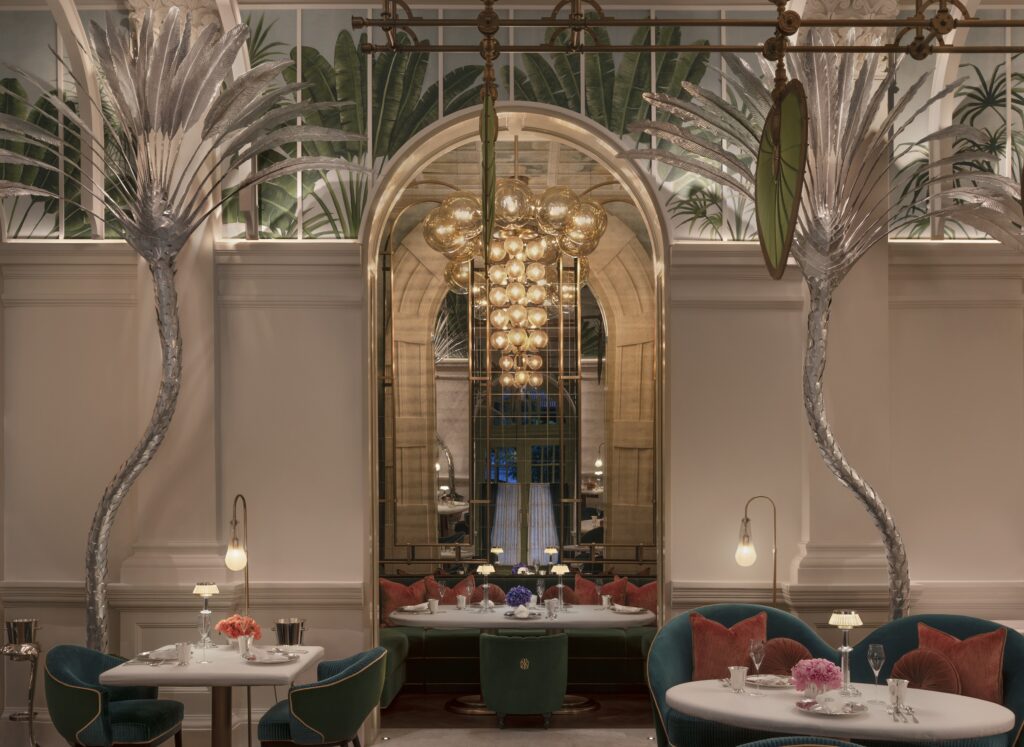
Guests should feel like they’ve stepped into a time capsule, and the design delivers that | Photo credit: Raffles Singapore
Guests should feel like they’ve stepped into a time capsule, and the design delivers that | Photo credit: Raffles Singapore
Raffles is a fitting backdrop for 1887 and the stage to translate forty years of Chiang’s collective experiences, and the one that will decide whether heritage gastronomy can be more than a beautifully executed sentiment.
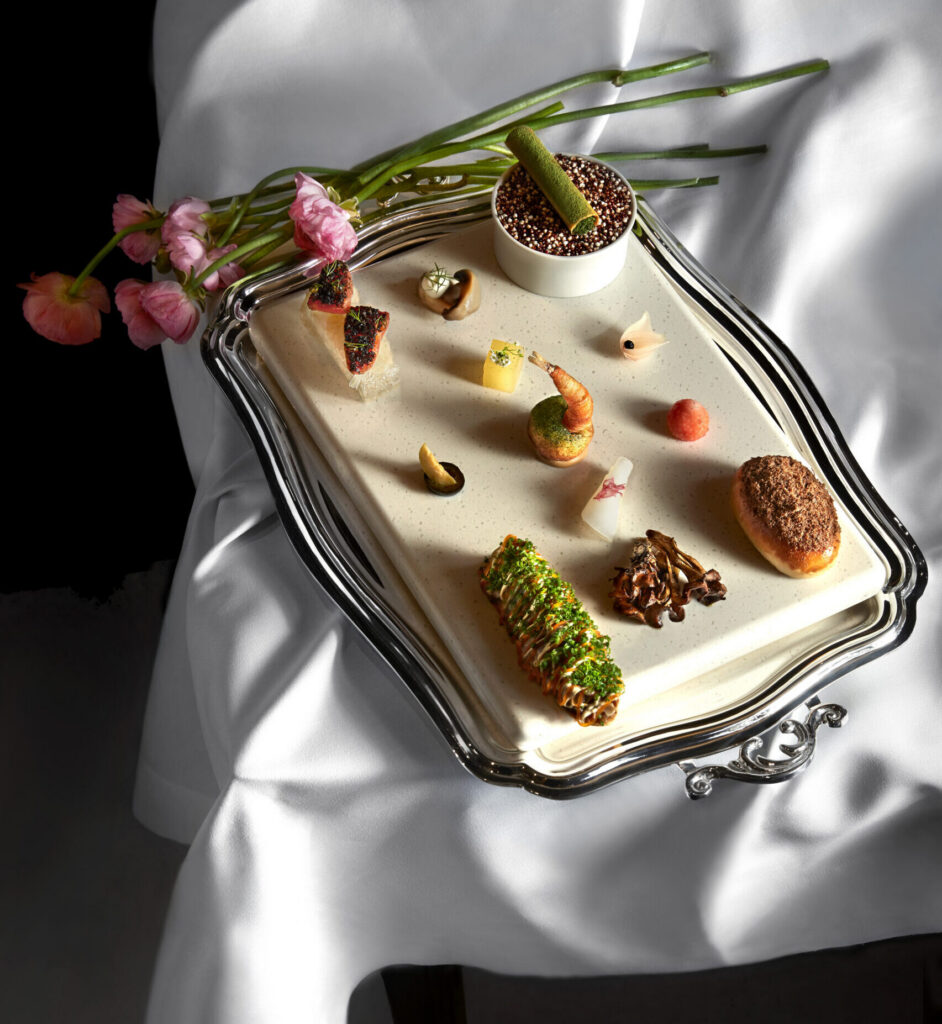

From Left: Grand Plateau de 1887 and Le Vert / Verdant Forest | Photo credit: Raffles Singapore
Author: Priyanka C. Agarwal
Priyanka is a writer, editor and storyteller. Her words have appeared on the print and online pages of The South China Morning Post, SilverKris, Her World, The Michelin Guide, Time Out, and more. She has also created custom content for leading brands like Sentosa, Mediacorp Special Projects, Asia’s 50 Best, IKEA, and Meat and Livestock Australia. Her expertise includes food and drink, wellness, luxury and travel.