

Could a peanut-aware policy in schools work better than a ban?
Research and best practices are key for K-12 foodservice professionals finding that peanut awareness means seeking a balance between banning and planning, while keeping safety at the forefront.
17 April 2026
Share this exclusive content from Saladplate

Some school foodservice directors are adopting a “plan, don’t ban” policy when it comes to peanut allergies | Photo credit: Shutterstock
There are a couple of things foodservice professionals who feed kids know for sure: Keeping kids safe is a responsibility they take very seriously, and that there’s rarely a “one size fits all” solution to challenges that come up.
One big challenge is peanut allergies. For some time now, many schools reacted to peanut allergies by banning peanuts altogether. Problem solved, right? Well, not really at all.
Recently, research from scientists, doctors and dietitians has been showing that a peanut ban may actually be the less safe option. Plus, there’s more of a sense of urgency now. The Protecting Children with Food Allergies Act was signed into law nationally few months ago, making it a requirement for USDA foodservice personnel to receive training on preventing, identifying and responding to food allergies.
Different school districts are trying different approaches and there’s a lot we can learn from their experiences. There are also lots of resources available from reliable sources, and they’re linked throughout this article along with studies mentioned.
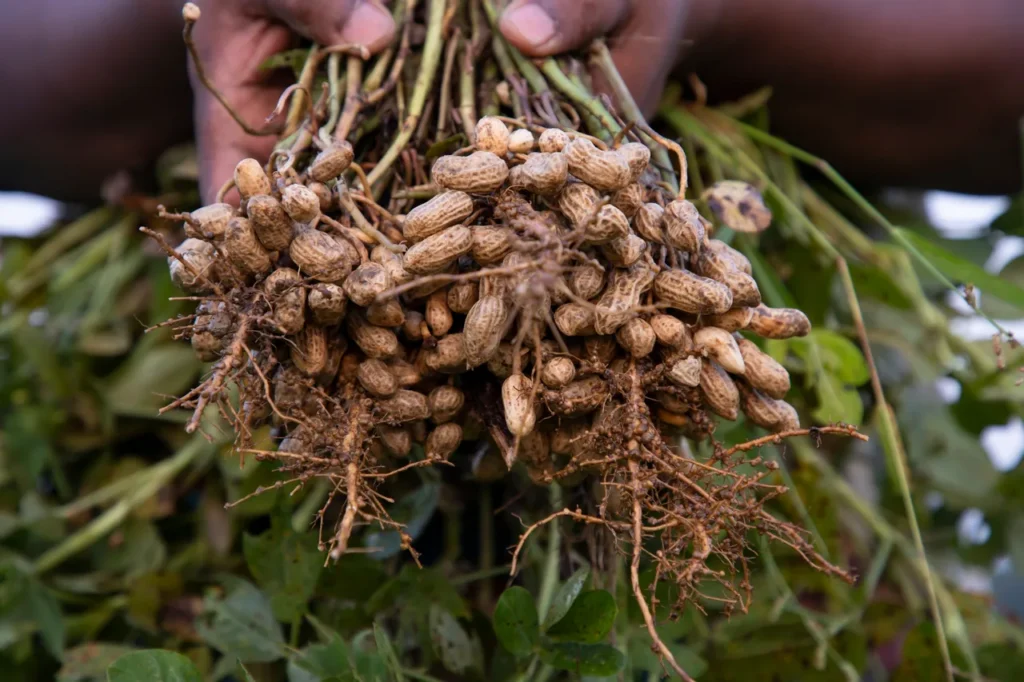
Peanuts are an important part of American agriculture. Can they safely find their way back into schools?
The research
Research shows that allergen management is safer and more effective than a peanut ban, according to organizations like the Centers for Disease Control and the American Academy of Allergy, Asthma and Immunology. Here are some things that research has found:
Casual contact poses an extremely low risk for anaphylaxis. (Anaphylaxis is a big part of what makes peanut allergies so scary to many people: In layman’s terms, throats can close up.) A study of 30 peanut allergic children who smelled peanut butter for 10 minutes resulted in zero reactions. Skin contact in the study also resulted in zero life-threatening reactions, only some redness and irritation on the skin for some.
In recent years, allergists have documents placing peanut butter in close proximity to peanut allergic patients to show them that just being near it doesn’t cause anaphylaxis.
Peanut bans do not work, according to quite a few studies. In a study of 567 food allergy reactions in a Canadian pediatric cohort, 4.9% of reactions occurred in “peanut-free” schools compared to 3% in schools that allow peanut foods. Authors of this study and other studies say banning peanuts may produce a “false sense of security.” This doesn’t translate to any situation in the world at large, potentially leaving peanut-allergic kids unprepared since they can’t just live in a bubble forever.
The National Peanut Board, which offers resources for school food pros, emphasizes keeping students safe, “but removing peanuts from menus isn’t the solution. By following best practices, schools can safely reintroduce peanuts and ensure inclusivity for all students.”
When peanuts are banned, the data shows that the ban doesn’t reduce the use of epinephrine (epi pens) in schools. A study of schools in Massachusetts that restricted peanut foods being brought from home and served in the cafeteria or classroom did not reduce the use of epi pens comparted to schools that did not have peanut-free policies.
Peanut aware vs. peanut free: Joe Urban, founder and CEO of School Food Rocks (SFR), is a veteran school food professional (a school food rockstar, if you will) with years and years of experience in K-12. He’s in favor of peanut awareness in schools.
His organization put together a peanut awareness guide created to empower schools with the knowledge that student safety and nutrition excellence can and should coexist, and that science-backed policies are essential to achieving both.
“For too long, many districts have defaulted to eliminating peanuts entirely,” Urban writes. “While well-intentioned, this approach is often unsupported by research and can lead to unintended consequences.”
The SFR guide lays out the differences between the peanut-aware and the peanut-free approaches: The peanut-free approach is often inconsistent and unenforceable while giving that false sense of security. And cross-contact can still occur, making things worse if there are no protocols in place. Conversely, a peanut-aware approach allows for transparency and with training, everyone is truly prepared to manage risk in real-world environments.
A peanut-aware policy relies on education, preparation and communication, a move from fear-based restriction to evidence-based management. For this to work, training for everyone in the school community is essential. That means every staff member from kitchen crew to classroom aides. Principals, bus drivers, school nurses and teachers also need to be on the same page. A successful peanut-aware policy also means transparent communication with parents, caregivers and other stakeholders in the school community.
Food allergy self-management for the students who are allergic to peanuts has been part of research, too. The experts at Food Allergy Research & Education (FARE) have found that different grade levels should have different expectations. For elementary schoolers in grades K-5, most students with food allergies can tell people what they’re allergic to and follow simple safety rules like handwashing. Middle schoolers (grades 6-8) can follow safety rules and understand dietary restrictions, check food labels for themselves and recognize symptoms of allergic reactions. For high schoolers, they can do all those things and also be more involved in the development of their own food allergy management plan.
Transparency can be achieved in a few ways, including things school food teams may already be doing, like publishing menus.

It’s important that kids don’t feel left out when they’re dealing with food allergies | Photo credit: Shutterstock
It’s important that kids don’t feel left out when they’re dealing with food allergies | Photo credit: Shutterstock
Insights from the behind the cafeteria line
Plan, don’t ban: Executive Chef Jason Tepper of Alexandria City Public Schools in Virginia is in favor of serving peanuts in a safe way in schools. Currently at his district, individually wrapped peanut items are available, but Tepper would like to be able to do something like make homemade peanut butter for the kids. He thinks a “plan, don’t ban” mindset is the best route.
“Thoughtful protocols and communication are the keys to protecting students,” Tepper says. “School cafeterias already manage multiple allergens every day. Dairy, eggs, wheat, soy and other allergens are present in school meals constantly. In fact, in many districts more students are allergic to dairy than peanuts, yet dairy remains a core part of school meals because we manage it carefully. This highlights an important reality: Allergen management systems allow us to safely serve a variety of foods without needing to eliminate entire food groups.”
Tepper calls peanut-butter-and-jelly sandwiches “one of the original comfort foods for students,” and he has other reasons for being pro-peanut.
“Peanuts themselves offer important benefits for school nutrition programs (high-quality plant protein, rich in healthy fats and nutrients, shelf-stable, affordable and versatile),” he says. “Peanuts also support American agriculture. Farmers across states like Virginia, Georgia, Alabama and Texas produce high-quality peanuts that supply food manufacturers and school meal programs nationwide.”
Tepper says he believes one day it might even be possible to bring peanut grinders into schools, “like the ones that were once common in grocery stores. Many people remember hearing those machines grinding roasted peanuts into fresh peanut butter. I remember shopping with my mother and hearing that grinder humming in the store. By the time we got home, the peanut butter was still warm. It’s a memory that’s stayed with me for more than half a century.”
Caution on underestimating risks: In another Virginia school district, Staunton City Schools, Director of School Nutrition Amanda Warren has personal experience with food allergies. A few years ago, a tick bite caused her to develop Alpha-Gal syndrome, an allergy to mammalian products that’s only now starting to get national attention.
“Because of my own food allergy experience with complex, I tend to see [peanut allergy management] more broadly as something people often underestimate until it affects them personally,” Warren says. “Food allergies need to be taken seriously and they are not about ‘food preferences;’ they are about health, safety, trust and whether someone can participate fully in everyday life without constantly calculating risks.”
As a devoted mom, Warren understands teens’ mindsets, too. “For students, the burden is not only physical, but also psychosocial,” she says. “When a child has to wonder whether a classroom celebration is safe, whether adults will take their allergy seriously, or whether they’ll be singled out or excluded, it can create anxiety, isolation and a lasting sense that they do not fully belong. Schools have a responsibility to not only protect students’ physical safety, but also to nurture their emotional wellbeing.”
Warren’s district is peanut aware for the older grades and peanut free for the younger grades.
“I decided not to serve peanut products in pre-K and elementary schools,” she says. “That approach made the most sense to me because the younger children are the least able to read labels, recognize symptoms or advocate for themselves in the moment. To me, protections should be developmentally appropriate rather than one-size-fits-all.”
In an ideal world, Warren says, “schools would use a layered, practical approach: annual, high-quality staff training, clear communication with families; allergy-aware classroom and cafeteria practices; no shaming or singling kids out; individualized plans when needed and quick access to epinephrine.”
Warren requires that all of her school nutrition teams are trains in CPR/First Aid, food allergy response and food safety. “We practice continuous training throughout the year,” she says. “The goal should always be both safety and inclusion.”
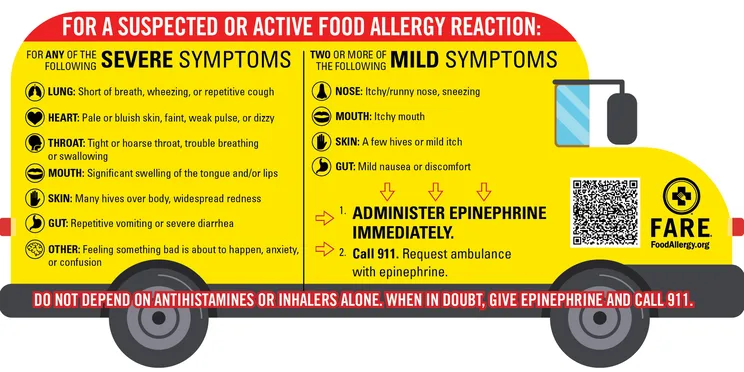
This is a design you can download from FARE | Photo credit: FARE
This is a design you can download from FARE | Photo credit: FARE
Best practices
Food Allergy Management in Schools (FAMS): Expert Recommendations for K-12 is free-to-download guide from FARE including suggestions that are evidence-based and practical and written for the whole school community, not just the foodservice team.
School Food Rocks’ guide outlines similar best practices, which fall under a few main areas including training, communication, cafeteria design, emergency preparedness and team coordination/cross-department training.
Training is the foundation for safety. Everyone should understand food allergies vs. intolerance, be able to recognize a reaction, how to use an epi pen/emergency protocol and food safety. The School Nutrition Association offers training modules on these areas.
Parent and stakeholder communication begins and ends with transparency. Share your peanut-aware policy before putting it into action and reinforce the plan with printed handouts and digital messages and parent letters. Get the school nurses in on every step of this.
Ellen Eichenbaum, lead RD with Menu Analytics, a nutrition consultancy, recommends using available platforms, like Nutrislice, to help share all the info.
“Menu Analytics strongly encourages schools to provide food allergy transparency by publishing weekly or monthly menus that include allergen information,” Eichenbaum says. “Schools can easily share online through platforms like Nutrislice making this critical information accessible to families.”
Design of a peanut-aware cafeteria should have designated (and supervised) allergen-safe tables (where friends who don’t have food allergies but have allergen-free meals can also sit), signage on handwashing and cleaning protocols for surfaces, utensils and trays.
In case of emergency, every student with a diagnosed allergy should have a current Individual Allergy Action Plan, accessible medicine available (such as an epi pen) at all times and a trained group of staff (mentioned above).
Cross-department training gets nurses, principals, teachers and transportation involved. Printed allergy action plans should be up in the nurse’s office, kitchen and main office. Emergency drills should happen annually, too.
In a nutshell, as Tepper says, “safety always comes first. But with clear protocols, trained staff and thoughtful planning, we can safely serve a wide range of foods while supporting student nutrition and American agriculture.”

Source: FoodService Director