

When one ingredient becomes an outbreak: Why food safety depends on layers
Preventing food ingredient contamination is a series of events that starts with the start of the supply chain.
26 August 2026
Share this exclusive content from Saladplate
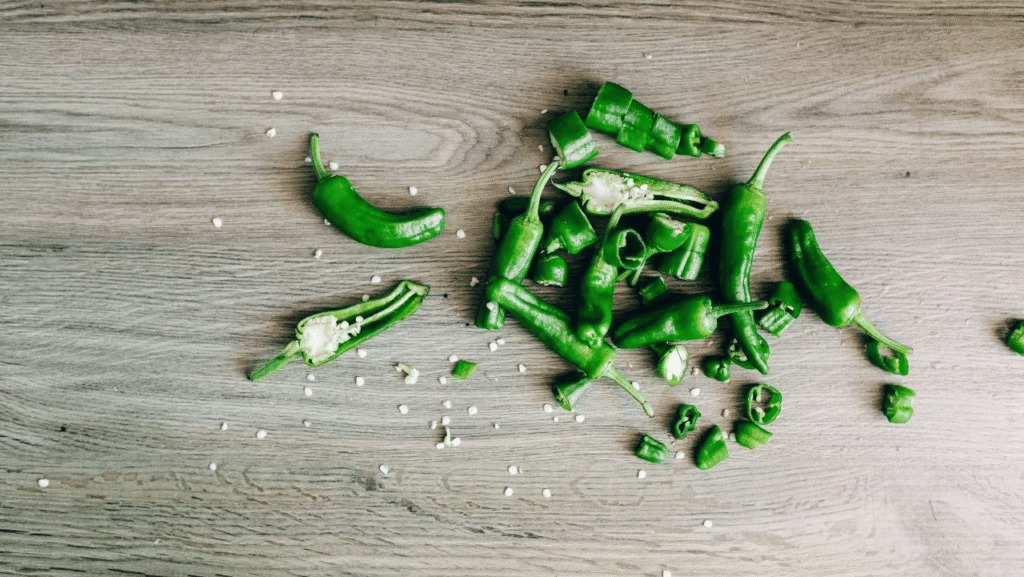
Photo credit: Pexels
Photo credit: Pexels
Food safety events often become visible to consumers only after illnesses are reported, recalls are issued, and public health agencies begin connecting the dots. But for those of us who work in food safety every day, these events are also a reminder of something more fundamental: prevention has to be built long before a product reaches the kitchen.
The current multistate Salmonella Javiana outbreak linked to jalapeño peppers is a good example. According to CDC and FDA updates, epidemiologic and traceback data point to jalapeño peppers grown in Sinaloa, Mexico as the source of the outbreak. The investigation remains open, and federal agencies continue to update their advisories as more information becomes available.
Those facts matter; they also tell a larger story. This is not simply a restaurant-level event: It is a supply-chain event with restaurant-level consequences.
When a contaminated ingredient moves through distribution and into foodservice operations, the impact is felt at the point closest to the consumer. Restaurant brands may not always see the growing conditions, harvest practices, or distribution steps that may have contributed to the contamination. But they are often the ones who have to respond quickly, remove product, communicate with suppliers, protect guests, and maintain confidence in their brand.
That reality is why food safety cannot depend on one control, one company, or one point in the supply chain.
Salmonella doesn’t fit into one box
Most consumers associate Salmonella with foods such as poultry or eggs. Those are important risk areas, but they are not the whole story. Salmonella can be associated with a wide range of foods, including produce, dry foods, and ready-to-eat ingredients. That is one reason it remains such a persistent public health challenge. It does not stay neatly inside one food category, one facility or one operational control.
Fresh produce creates a particularly important risk-management challenge because it is often served raw or minimally processed. A jalapeño diced into salsa, added to a sandwich or used as a garnish may never receive a final kill step. Cooking can reduce microbial risks when applied properly, but many fresh ingredients do not pass through that step before they reach the consumer.
That changes the risk profile.
When there is no final heat treatment, prevention has to come from multiple safeguards working together. Those safeguards include supplier approval and verification, agricultural and post-harvest controls, sanitary transportation and distribution, traceability, employee hygiene, separation of raw and ready-to-eat foods, effective cleaning and sanitizing and the ability to respond quickly when public health agencies identify a concern.
The lesson is not that operators should fear fresh produce. Fresh produce is an essential part of how people eat. The lesson is that ready-to-eat ingredients deserve the same disciplined, science-based attention as any other food safety risk.
The risk does not stop at receiving
Once a potentially contaminated ingredient enters an operation, the issue is no longer limited to the original product. Operations leaders must understand how quickly risk can move through an environment if controls are not consistently followed.
Hands, knives, cutting boards, prep tables, reach-in coolers, containers and shared equipment can all become part of the pathway if contamination is introduced and not controlled. That is why basic practices still matter. Hand hygiene, proper separation of ingredients, avoiding cross-contamination, cleaning and sanitizing food-contact surfaces and training team members to recognize and act on food safety concerns are not routine tasks simply to pass an inspection. They are the daily controls that help keep one ingredient problem from becoming a broader operational problem.
Food safety works in layers, not silos
Here’s the biggest takeaway for restaurant leaders: There is no single silver bullet that keeps food safe on its own.
It all starts long before food hits a plate. Vetting suppliers carefully sets the tone before anything even shows up at the loading dock. Extra attention to produce matters most for the foods that never sees a kill step. Solid traceability systems help you figure out exactly where ingredients came from once an outbreak starts. Training staff and reinforcing good habits keeps people doing the right thing, shift after shift. Proper cleaning and sanitizing get a kitchen clean, not just clean-looking. Auditing systems and behaviors regularly ties it all together.
Each layer reduces the overall risk. None of them eliminates risk. The strongest operators plan for prevention but also build readiness for the moments when prevention is tested.
Response readiness is a food safety control
Outbreaks test a company’s ability to respond under pressure. When a recall or public health advisory is issued, operators need more than good intentions. They need clear roles, current supplier information, accurate product records, escalation processes and leaders who know how to act without waiting for uncertainty to become certainty.
Can each location identify affected product quickly? Can they determine whether it was used, discarded, transferred or still on hand? Can they isolate it before service begins? Can they document their actions? Can they communicate with suppliers, regulators and internal teams in a disciplined way?
Those questions are not theoretical. They are the difference between a food safety program that looks good on paper and one that performs in the real world.
For restaurant operators and foodservice leaders, this is a practical call to action. Stress-test your traceability and recall process before you need it. Confirm that store managers understand what to do when an ingredient is implicated. Review prep practices for raw and ready-to-eat foods. Reinforce hand hygiene and sanitation expectations. Verify that supplier programs address high-risk ingredients, not just high-volume ones, and create a culture where team members know they can pause, escalate and remove product when something does not look right.
Bringing it back to prevention
Most consumers only think about food safety when an outbreak appears in the news. The real work happens much earlier and much more quietly. It happens when suppliers are selected, specifications are written, products are received, cases are tracked, employees are trained, surfaces are cleaned, and leaders reinforce the same expectations day after day.
This outbreak is not a reason to move away from fresh ingredients. It is a reminder that fresh ingredients require strong systems. Protecting guests depends on controls that connect the field, processor, distributor, restaurant and dining room.
For food safety leaders, the takeaway is clear: do not wait for a recall to find out whether your systems work. Pressure-test them now. Look for gaps in traceability, supplier verification, sanitation, training and escalation. Make sure every layer is strong enough to perform when conditions are not ideal.
The best food safety programs are not built around a single control or a single moment of response. They are built through prevention, verification and readiness across the entire supply chain, every day. That is what protects consumers. It is also what protects trust.

Source: Nation’s Restaurant News