

Dining by Algorithm: Is AI Becoming the New Restaurant Consultant?
From menu engineering and recipe development to procurement planning and demand forecasting, AI is reshaping how restaurants make decisions behind the scenes.
27 July 2026
Share this exclusive content from Saladplate
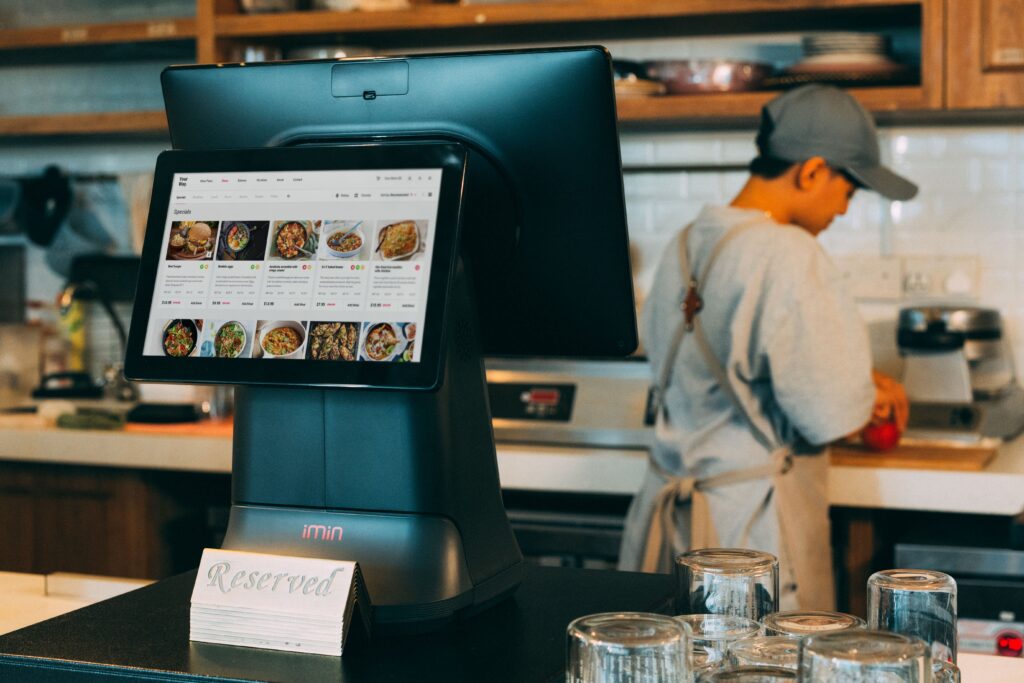
AI is reshaping how restaurants make decisions | Photo credit: Pexels
AI is reshaping how restaurants make decisions | Photo credit: Pexels
For years, the restaurant industry’s biggest decisions have been guided by experience, instinct and countless hours spent on the kitchen floor. Whether refining a signature dish, forecasting demand for the weekend or deciding when to retire an underperforming menu item, chefs and restaurateurs have traditionally relied on intuition honed through years of service.
Today, those decisions are increasingly being informed by data, with AI emerging as a new collaborator in the decision-making process. But as algorithms become hospitality’s newest strategic adviser, one question remains: where does data end and human judgement begin?
Technology does not wear a chef’s jacket or stand over the pass. Still, it can analyse thousands of recipes, compare competitor menus, forecast ingredient costs and identify emerging flavour trends in seconds. Increasingly, AI is helping restaurants make faster, more informed decisions behind the scenes, from what goes on the menu to how ingredients are sourced and ordered.
Unlike earlier restaurant technologies that focused on streamlining reservations, payments and ordering, AI is moving into areas once considered deeply human. From menu engineering and recipe adaptation to inventory planning, allergen management and procurement, operators are increasingly turning to algorithms to improve efficiency, reduce waste and respond more quickly to changing consumer preferences.
Yet for all its analytical power, AI is not replacing chefs. Instead, it is redefining how decisions are made, combining data-driven insights with the creativity, intuition and sensory expertise that remain uniquely human.
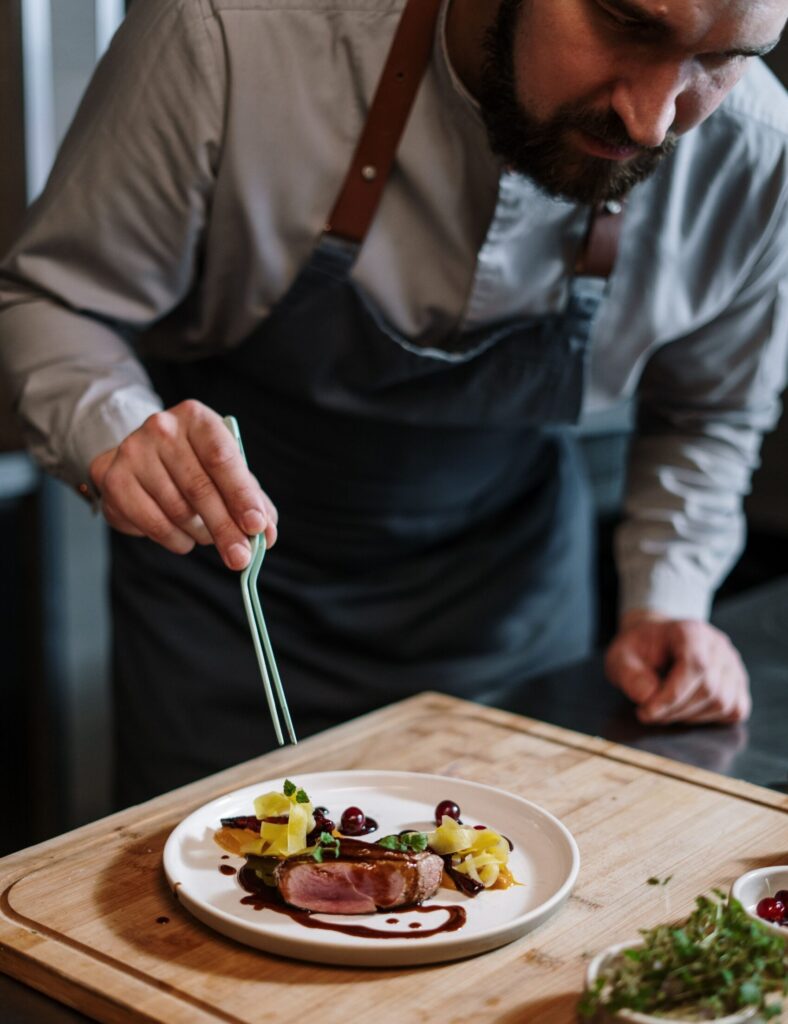
AI is helping chefs accelerate menu development | Photo credit: Pexels
AI is helping chefs accelerate menu development |
Photo credit: Pexels
From Gut Feeling to Data-Driven Decisions
Menu development has traditionally been equal parts creativity and trial and error. Chefs spend weeks researching trends, experimenting with ingredients and refining recipes before a dish reaches the dining room. AI is helping to accelerate that process.
Rather than beginning with a blank sheet of paper, chefs can now analyse thousands of menus, identify emerging consumer preferences and explore ingredient pairings within minutes. The technology provides a foundation for ideation, allowing culinary teams to spend less time gathering information and more time refining dishes.
For US-based chain Piada Italian Street Food, AI has become less of a recipe generator than a collaborative sounding board. Culinary Innovation Manager Dawn McClung has described using ChatGPT to analyse beverage trends, compare competitor menus and evaluate flavour combinations before beginning recipe development. The technology helped narrow dozens of potential concepts into a focused direction, allowing the culinary team to move more quickly into testing and refinement.
The recipes still underwent extensive testing, tasting and refinement before making it onto the menu. While AI can suggest flavour ratios or generate initial recipes, it cannot determine whether a drink tastes too sweet, whether a sauce needs more acidity or whether a dish delivers the emotional connection diners expect. Those decisions still rely on experience and palate.
McClung describes AI as “a sounding board and a brainstorming partner” rather than a replacement for culinary expertise. “It’s never going to replace a culinary brain or hospitality,” she shares. “It’s there as an aid and a gut check. But it has to be paired with a human mind.”
This emerging relationship reflects a broader shift across hospitality. Rather than replacing creativity, AI is increasingly being viewed as another tool in the kitchen, much like a combi oven or immersion circulator, one that enhances, rather than dictates, the creative process.
Engineering Smarter Menus

Australian Venue Co. (AVC) is developing AI-powered menu analysis tools
Photo credit: AVC
Australian Venue Co. (AVC) is developing AI-powered menu analysis tools | Photo credit: AVC
Beyond recipe development, AI is also changing how restaurants design menus themselves. Traditionally, menu engineering required operators to analyse sales reports, food costs and customer preferences manually before deciding which dishes to promote, reposition or remove. AI can now perform those analyses almost instantly, identifying opportunities that might otherwise go unnoticed.
Australian Venue Co. (AVC), which operates more than 220 hospitality venues across the country, is developing AI-powered menu analysis tools capable of evaluating both commercial performance and customer experience. The technology is designed to assess everything from contribution margins and sales volumes to menu balance and dietary inclusivity, helping chefs make more informed decisions about menu composition while ensuring guests have sufficient vegetarian, vegan and allergen-friendly options.
AVC is also exploring how AI can support continuous menu optimisation. “We’re building an AI tool that can analyse menu structure and dish performance and provide recommendations to optimise dishes and the overall menu,” says Kylie Moncur, Chief Marketing Officer at Australian Venue Co. “From a menu performance perspective, the tool can analyse volume, contribution margin and total contribution at an item level to guide chefs as they review their menus to improve or replace dishes. Overall, the tool will guide kitchen teams in optimising menus to continuously improve customer experience as well as commercial performance.”
Rather than replacing culinary judgement, AI provides another layer of intelligence, enabling operators to optimise menu layouts, improve upselling opportunities and continuously refine offerings based on real-time performance data.
The New Business Brain
AI is helping operators anticipate demand more accurately | Photo credit: Pexels
AI is helping operators anticipate demand more accurately | Photo credit: Pexels
Increasingly, AI’s greatest impact may lie not on the plate but behind the scenes. Restaurants operate within razor-thin margins, where inaccurate forecasting can result in unnecessary waste, stock shortages or lost revenue. AI is helping operators anticipate demand more accurately by analysing historical sales, weather patterns, local events and purchasing behaviour simultaneously.
This allows procurement teams to order ingredients with greater precision, reducing excess inventory while ensuring kitchens remain adequately stocked during peak periods.
Foodservice company Sodexo has reported significantly reducing recipe development time by using AI to analyse seasonal trends and historical menu performance before culinary teams begin testing. The technology also enables operators to model ingredient price fluctuations, allowing menus to be adjusted proactively rather than reactively when food costs rise.
For multi-site operators managing hundreds of locations, these efficiencies can translate into substantial operational savings while supporting broader sustainability goals through reduced food waste.
Balancing Algorithms with Instinct


Chef Christian Frangiadis | Photo credit: One by Spork
Despite its growing capabilities, AI still has clear limitations. While it excels at analysing data, recognising patterns and generating possibilities, it cannot taste, smell or understand the emotional resonance of a memorable dining experience.
Fine dining chefs experimenting with AI describe it as an accelerator rather than a replacement. It can shorten experimentation, suggest technical solutions and surface unexpected combinations, but every recommendation still requires validation through cooking, tasting and refinement.
Perhaps more importantly, AI cannot replicate the intuition developed through years in professional kitchens. The instinct to adjust seasoning without measuring, recognise subtle textural changes or understand how diners respond emotionally to a particular dish.
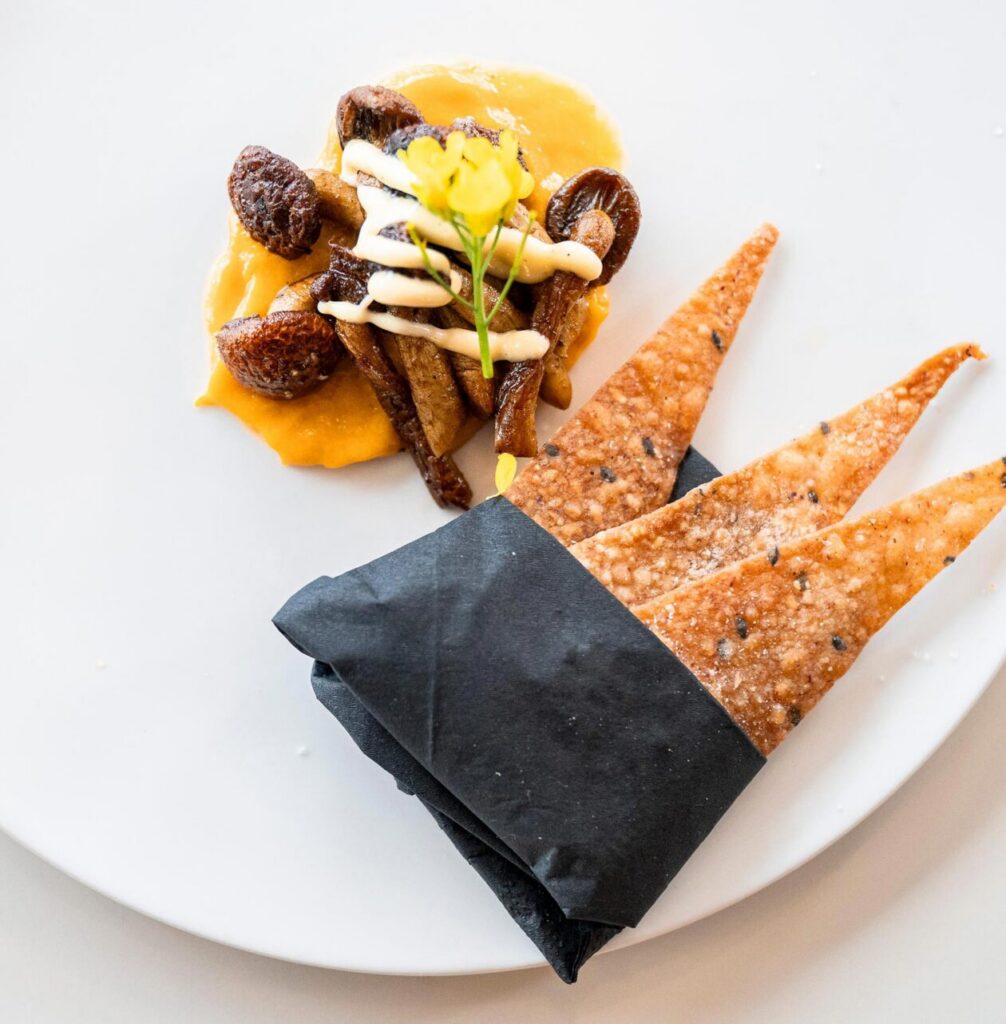
AI can be helpful tackling complex food science questions during recipe development | Photo credit: One by Spork
AI can be helpful tackling complex food science questions during recipe development | Photo credit: One by Spork
Chef Christian Frangiadis of One by Spork has found AI particularly useful when tackling complex recipe development and food science questions, but believes its value lies in accelerating experimentation rather than replacing expertise. “It does help me get to a result more quickly with less experimentation in the lab,” he said. “Ultimately, it’s necessary to have some basic knowledge of what I’m asking.”
That distinction may ultimately define AI’s role within hospitality. It is exceptionally good at answering questions, but still relies on people to ask the right ones.
What’s Next?

Hospitality will continue to be a people-led business | Photo credit: Pexels
Hospitality will continue to be a people-led business | Photo credit: Pexels
As AI becomes more deeply embedded across hospitality, its role is likely to expand well beyond menu development. Procurement planning, allergen management, workforce scheduling, sustainability reporting and personalised dining experiences all present opportunities where AI can help operators make smarter, faster decisions.
Much like reservation platforms, point-of-sale systems and online ordering before it, AI is steadily becoming another essential part of the restaurant toolkit. Yet hospitality has always been, at its heart, a people business.
Technology can analyse consumer behaviour, optimise margins and identify emerging trends, but it cannot replace the judgement that comes from years of cooking, serving and understanding guests. This is substantiated by Josh Kopel, Michelin-awarded restaurateur, restaurant consultant and host of the Full Comp podcast, who says, “Technology doesn’t replace hospitality — it amplifies it. The restaurants winning right now are the ones using tech to remove friction from every guest touchpoint while freeing their teams to focus on what actually matters: the human connection.”
AI may well become as commonplace in restaurant kitchens as reservation systems or point-of-sale software. Its greatest contribution, however, may not be creating recipes or replacing chefs, but helping restaurants make better decisions before the first ingredient is even prepared. After all, hospitality has never been built on data alone. It is built on judgement, creativity and an understanding of people. The algorithms may continue to evolve, but knowing when to trust them, and when to trust instinct instead, may prove to be the industry’s most valuable skill of all.
Author: Michelle Yee
A content and communications professional, Michelle spent more than a decade creating content for several leading media titles including Lonely Planet Asia, Yahoo Singapore,and Wine & Dine. After leaving the media industry in 2019, she has been honing her craft at a global communications agency where she helps develop and drive publicity campaigns for brands in the consumer and corporate sector.